

During the 19th century, Merthyr Tydfil was transformed from a modest market settlement into one of the most important industrial towns in the world. Its rapid growth was driven by ironmaking, coal mining, and limestone quarrying, which together powered the Industrial Revolution in South Wales. By the early decades of the century, Merthyr had become the largest iron-producing centre on the planet, with its products exported globally for use in railways, bridges, ships, and heavy machinery.
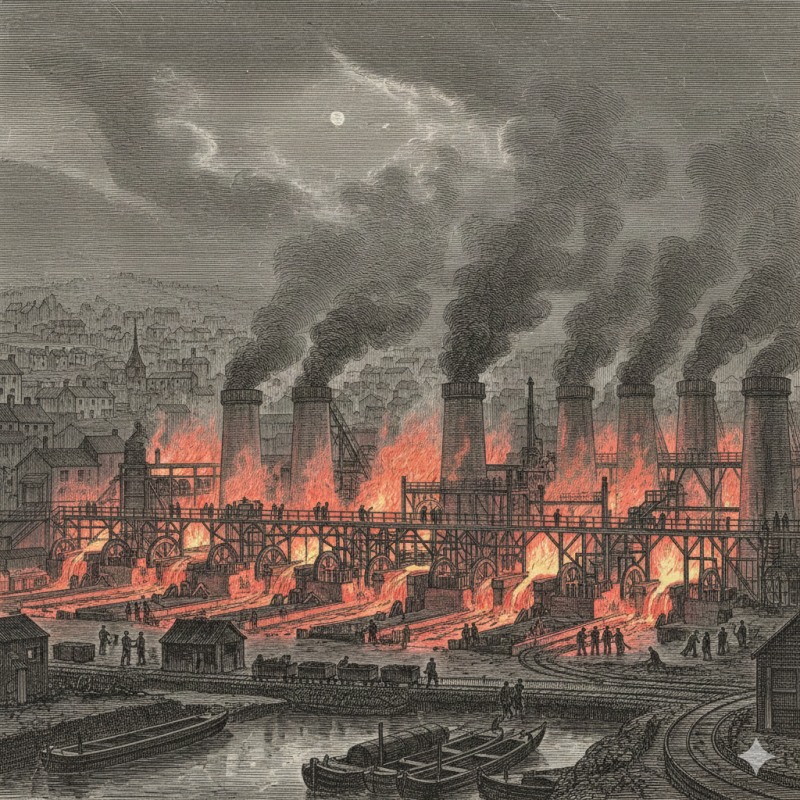
The landscape of Merthyr was dominated by vast ironworks such as Cyfarthfa, Dowlais, Plymouth, and Penydarren. Tall chimneys, furnaces, tramroads, and spoil heaps reshaped the valleys, while smoke and steam were constant features of daily life. These industries attracted thousands of workers from rural Wales, England, Ireland, and further afield, causing the population to expand at an extraordinary rate. By the mid-19th century, Merthyr was the largest town in Wales.
Living conditions for much of the population were harsh. Housing was built quickly to meet demand, resulting in dense rows of terraced cottages, many without proper drainage, sanitation, or clean water. Overcrowding and poor hygiene led to frequent outbreaks of disease. Despite this, strong community ties developed, supported by chapels, pubs, and mutual aid societies that played a central role in everyday life.
Work in Merthyr was hard and often dangerous. Men laboured long hours in ironworks, coal mines, and limestone quarries, facing constant risk of injury or death (Matthew Berryman was killed in a rock fall accident in Vaynor limestone quarry) . Women contributed to household incomes through domestic service, shop work, and taking in washing, while children commonly worked from a young age until education reforms later in the century began to limit child labour.

The town was sharply divided by class. While most workers lived in basic cottages, foremen, managers, and skilled employees occupied more substantial late-19th-century villas, particularly in districts such as Cefn Coed and Vaynor. These houses offered greater space, privacy, and comfort, reflecting the social hierarchy created by industrial wealth.
Merthyr was also a centre of political and social activism. Economic hardship and inequality led to unrest, most notably the Merthyr Rising of 1831, one of the most significant working-class uprisings in Britain. Throughout the century, trade unions, Chartism, and reform movements gained strength, leaving a lasting legacy of political awareness and collective action.
Create Your Own Website With Webador